
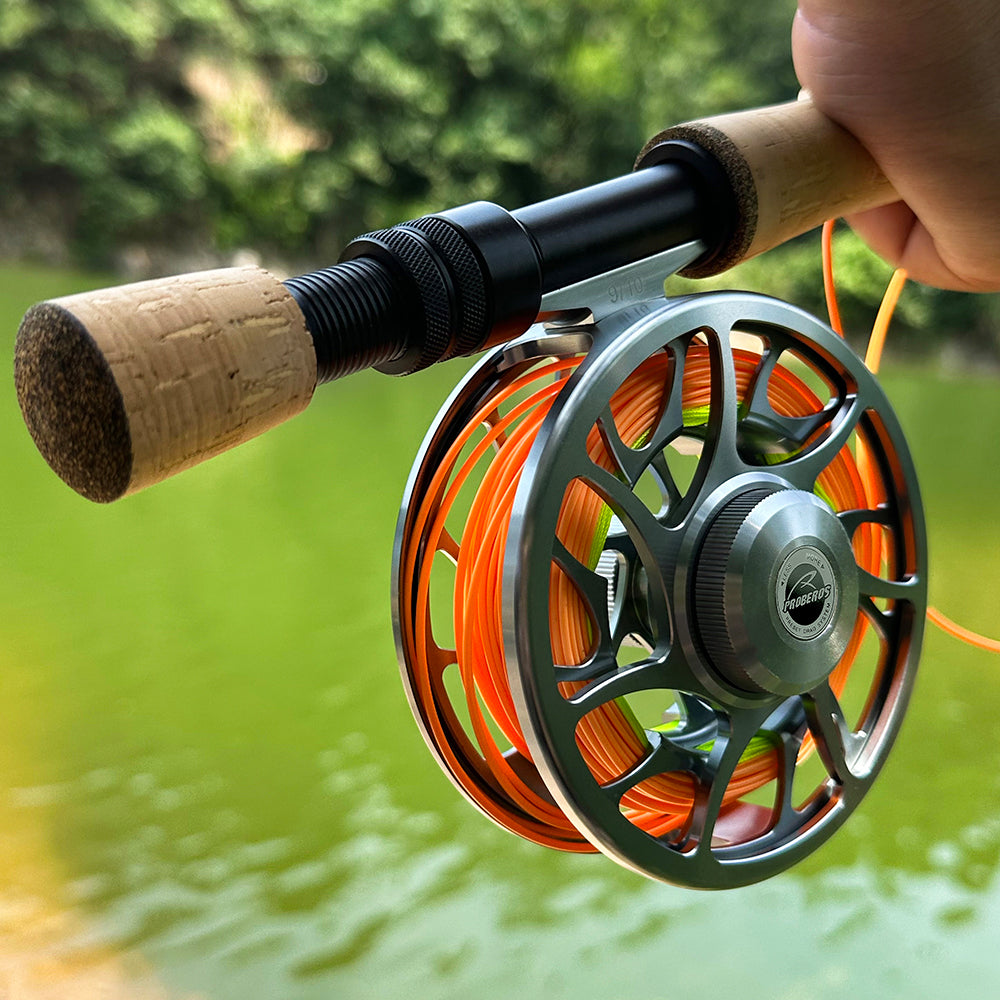
6061-T6 aluminium, 304/316 stainless steel, 5-axis CNC.
Almost every failure in a cheap saltwater reel traces back to the wrong alloy or a shortcut in finishing. KATYUSHA reels are built from two materials only, both used where they actually belong.
6061-T6 is a precipitation-hardened aluminium-magnesium-silicon alloy. We use it because it machines cleanly, takes anodising consistently, and gives a strength-to-weight ratio that keeps a 500-size jigging reel usable all day without making it feel disposable.
Anything that sees load, friction or standing water is stainless. 316 is used where chloride attack is worst - pinion shafts, screws and drag surfaces on offshore models.
| Step | What happens | Control |
|---|---|---|
| 1. Billet prep | Saw, face and rough the aluminium blank | Material certificate on incoming stock |
| 2. CNC machining | 5-axis milling of body, spool, covers; CNC turning of shaft and spool bore | First-article inspection, in-process gauging |
| 3. Deburr | Hand and vibratory deburring | Visual + feeler check on sealing surfaces |
| 4. Anodise / passivate | Hard anodising of aluminium, passivation of stainless | Coating thickness specified on the part drawing |
| 5. Assembly | Drag stack, bearings, handle, line guide | Lubrication spec, torque spec |
| 6. Test | Drag force, free-spool, water ingress | Pass criteria set by the model rated drag and seal test |
| 7. Pack | Retail box or OEM packaging | AQL sampling plan agreed per order |
Back to factory Ask for a spec sheet
6061-T6 aluminium for full-metal bodies, spools and side covers, finished with hard anodising.
Shafts, bearings, drag washers and springs are stainless. 316 marine grade is used on offshore models where chloride attack is worst; 304 is used for internal parts that stay inside a sealed body.
Tolerances are held to the drawing for each part, with first-article inspection on every CNC setup, with first-article inspection on every CNC setup.
Sealed models are specified as such and are water-tested before packing. The rating and test criteria for a given model are stated on its product page.