
DG80II Two-Speed Trolling Reel: Bench to Yellowfin
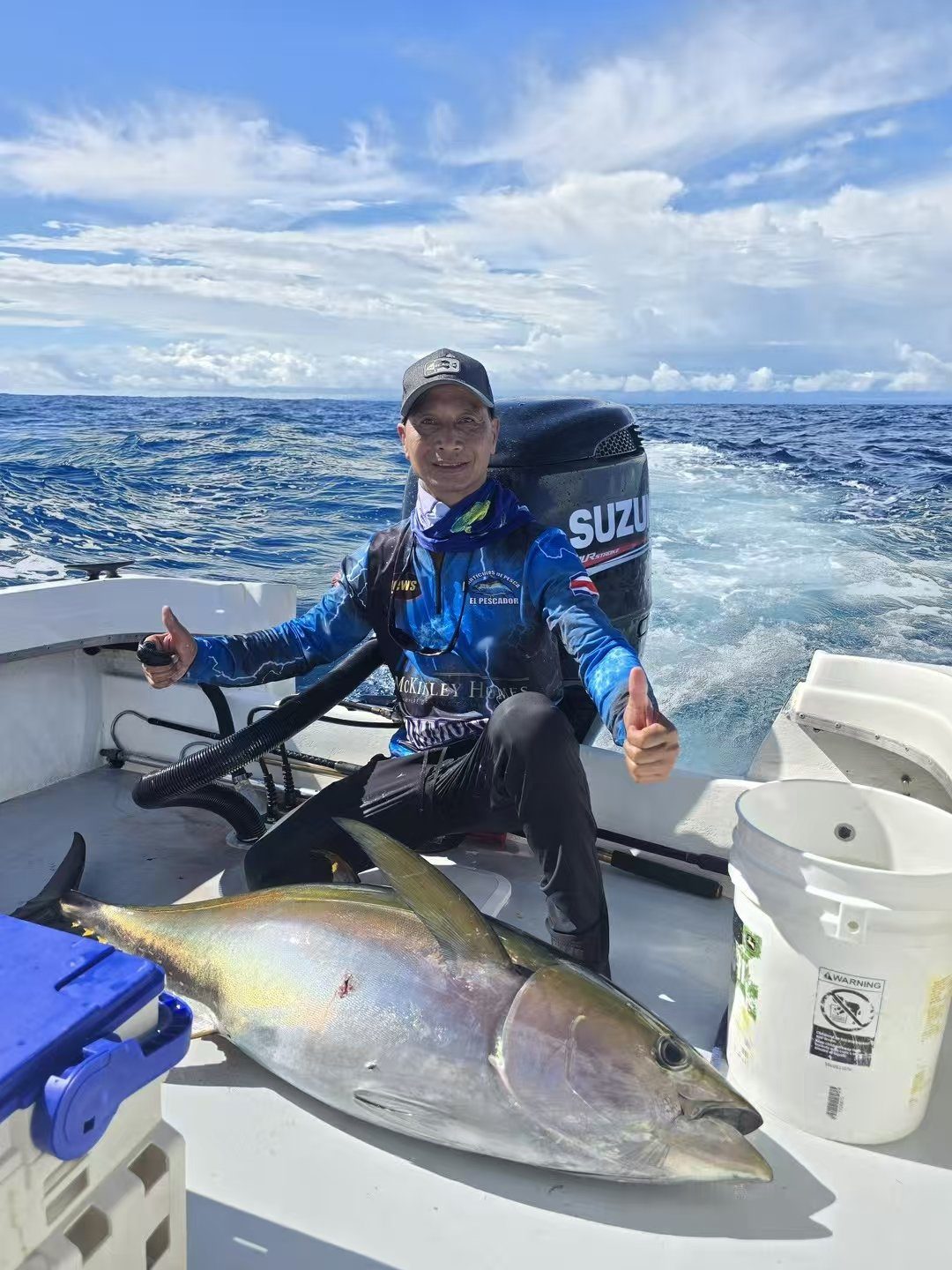
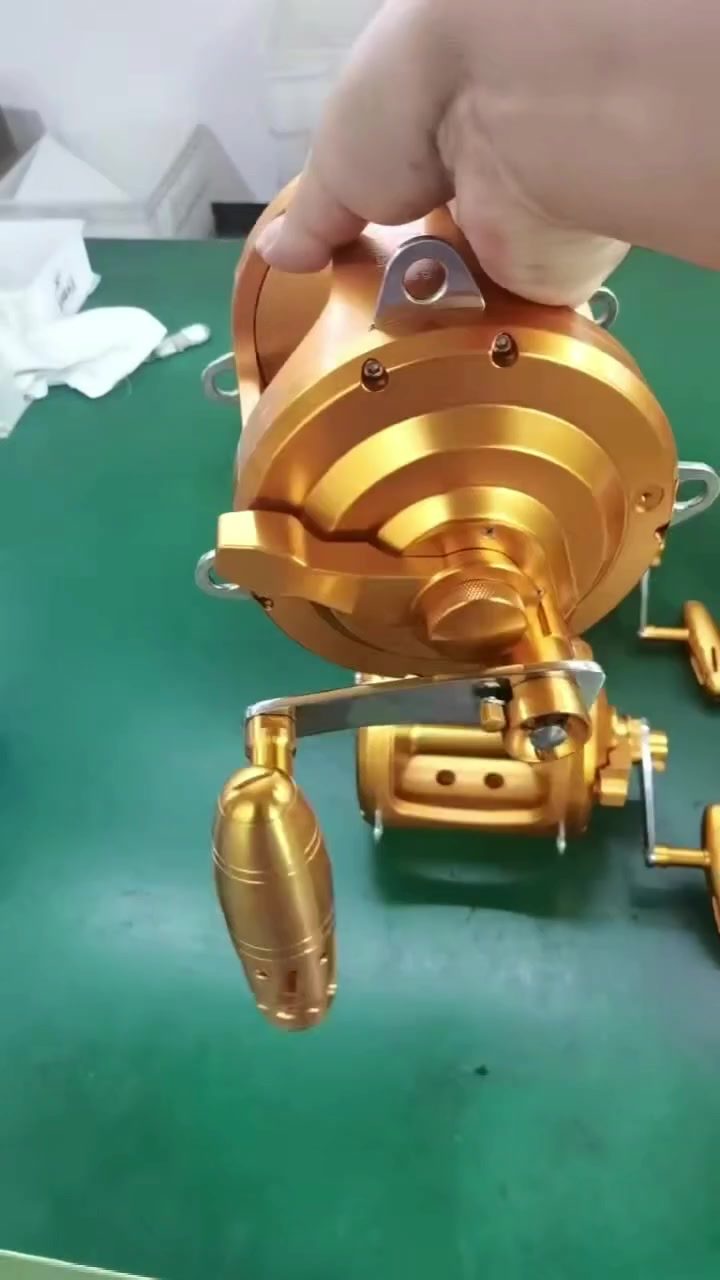
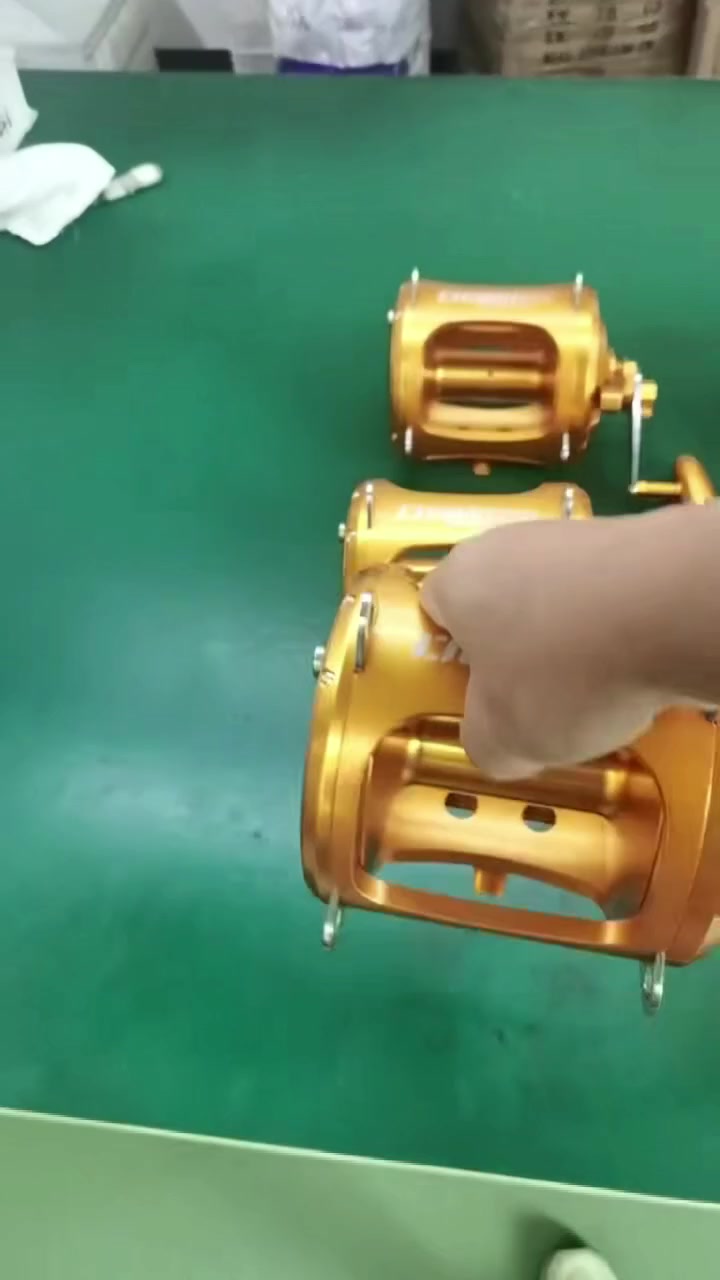
Every KATYUSHA reel begins on a green assembly bench in our Dongguan factory: rows of freshly anodized bodies, handles still being turned by hand, every unit checked before it earns a place in a carton. Our latest batch footage shows exactly that — a run of DG80II two-speed trolling reels, the gold finish still bright from the anodizing tank.
A few weeks later those same reels are a world away: a small center console running offshore at sunrise, and a yellowfin tuna on the deck. This post connects the two ends of that journey.
What the factory footage shows
The clip walks along a production batch of DG80II bodies. Three details are worth pausing on:
- Machined, not cast. Frame and side plates are CNC-machined from 6061-T6 aluminium barstock — the same process we documented in Inside the KATYUSHA Factory. Cast bodies flex under load; machined bodies do not.
- The finish is the armour. Gold anodizing on saltwater tackle is not decoration. It is a hard oxide layer that resists salt-air corrosion far better than paint.
- Turned by hand before boxing. You can see a handle being spun in the clip — every DG80II is checked for smooth, quiet rotation before it ships, on top of the 8+1 shielded stainless bearings inside.
The numbers behind the reel
| Spec | DG80II |
|---|---|
| Type | Two-speed lever-drag jigging / trolling reel |
| Gear ratio | 2.7:1 high / 1.3:1 low |
| Max drag | 45 kg |
| Bearings | 8 + 1 shielded stainless steel |
| Weight | 2.80 kg |
| Frame | Full-metal machined aluminium, stainless internals |
| Hand | Left or right |
Two figures do most of the work. 45 kg of max drag puts the DG80II in genuine big-game territory — the class of reel you want when a fish decides to head for the bottom. And the two-speed gearing turns that power into something you can actually use: 1.3:1 low gear for winning line during the fight, 2.7:1 high gear for getting your lure or jig back up quickly between drifts.
Why two gears matter offshore
Ask anyone who has fought a big tuna: the fish wins in three runs, the angler wins in the pauses between them.
In low gear the DG80II trades speed for cranking power. When a yellowfin sounds and the spool is dumping line, a 1.3:1 ratio lets you gain line on every handle turn without stalling — and that is where the 45 kg drag and stainless internals earn their keep, because nothing in the drivetrain flexes with the lever pinned.
Then the fish stops. In a single-speed reel those pauses are spent cranking a handle that feels empty. In the DG80II you flick to high gear, and 2.7:1 puts your spread back into the pattern in seconds. Offshore, that difference compounds on every drift.
On the water
That is the scenario in these photos: a day running trolling spreads in open blue water, and a yellowfin on deck before lunch. Trolling for yellowfin is a game of coverage — spread the lures, work the speed, and be ready for the first run when the strike comes.
The DG80II is built for this style of fishing and pairs well with PE 4–8 braid on a heavy rod. Set the lever below strike for the hookup, smooth the pressure up as the fish tires, and keep the rod working — the reel's job is to be the steady, flex-free link between you and the fish.
Anglers who mix techniques get the same reel for deep-water slow-pitch and speed jigging, which is why it sits in our jigging & trolling reels collection.
From this batch to your reel
The batch in the clip is real production. The DG80II is designed, machined and assembled by KATYUSHA at our own plant in Dongguan, China, and ships worldwide from that floor.
- One reel: available now at $299.99 on the DG80II product page.
- Bulk or private label: custom colour, laser engraving and retail packaging from 200 pcs per model — see the OEM programme.
Questions on specs, MOQ or lead times? Reach the sales desk through the contact page.
FAQ
Is the DG80II cast or machined?
Machined. Frame and side plates are CNC-cut from 6061-T6 aluminium with 304/316 stainless internals, which is why the reel holds 45 kg of drag without frame flex.
What are the two gear ratios for?
Low gear (1.3:1) is for fighting — maximum cranking power while a fish runs. High gear (2.7:1) is for retrieving lures and jigs quickly between presentations or after a hookup.
What line should I use for trolling with the DG80II?
PE 4–8 braid on a heavy trolling or jigging rod, matched to your target species and drag setting.
Is it suitable for jigging as well as trolling?
Yes — it is designed for deep-water slow-pitch and speed jigging as well as offshore trolling. The two-speed switch is what makes it practical across both styles.
← All articles